

Yes, adults can have imaginary friends. Research indicates that imaginary friends are a normative part of both childhood and adulthood. Some adults continue to interact with their childhood imaginary friends or even create new ones. In fact, a study found that 7.5% of adults reported having an imaginary friend. Additionally, some adults may create imaginary companions as a way to cope with loneliness.
For an extended period spanning over five decades of my adult life, I’ve had an imaginary friend, a constant source of comfort and connection. Growing up as the only child within a large, extended family consisting exclusively of cousins, I’ve always turned to my imagination to combat any feelings of loneliness or boredom. The truly fascinating thing about this long-term companionship is that I can still clearly see and have genuine conversations with my imaginary friend. It’s crucial to emphasize, though, that while this bond is special, I’m far from solitary. I am happily married and live with three beloved cats, so my life is full of love and companionship in many forms.
Throughout my life, marked by numerous hardships and the devastating impact of repeated family losses, my imaginary friends served as an indispensable lifeline, offering solace and unwavering support when real-world connections felt scarce. Unlike any human companion, they possessed an unparalleled ability to listen without judgment, offering insightful perspectives and providing comfort during the most turbulent times. In those isolating moments of profound solitude, I found myself turning to them, confiding my deepest fears, anxieties, and unasked questions, always receiving gentle, reassuring answers that resonated with my inner self. More than just companions, they were, in a very real sense, my personal confidence boosters, equipping me with the resilience to navigate life’s uncertainties and ultimately emerge not just surviving, but thriving and significantly stronger.
The ability to tap into vivid imagination and transform thoughts into compelling narratives is a potent skill. It allows for the creation of engaging content, whether it’s crafting intricate stories, developing insightful articles, or simply expressing personal experiences with depth and originality. This capacity for imaginative writing enables the exploration of complex ideas, the portrayal of nuanced emotions, and the forging of meaningful connections with readers. It is a gift that can be honed and refined, leading to increasingly sophisticated and impactful work.

The act of writing a story and infusing characters with life shares a striking resemblance to the experience of having an imaginary friend. Just as an imaginary friend provides companionship and a safe space for exploration, crafting characters allows for the creation of believable personas that can offer solace, understanding, and a unique perspective. The writer, in a sense, becomes the confidante and companion to these fictional beings, nurturing their growth and providing them with a world to inhabit, much like one would with an imaginary companion. This shared capacity for imagination and emotional connection highlights the profound similarity between the creative process and the bonds we forge with our inner and outer worlds.
The question of what happens to imaginary friends after our physical passing is a deeply philosophical one, tinged with both sadness and a touch of whimsical wonder. Since they are products of our imagination, their existence is inextricably linked to our consciousness.
Here are some possible scenarios:
- Return to the Source: Perhaps, upon our passing, they simply fade back into the wellspring of our imagination, remaining as cherished memories and lessons learned. They become part of the rich tapestry of our inner world, influencing our thoughts and actions even from afar.
- Independent Existence: It’s also possible that they gain a form of independent existence, continuing their own journeys in the realm of the unseen. They might wander through the corridors of the afterlife, perhaps even finding new companions or exploring new dimensions of thought and feeling.
- Transcendence: They might transcend their original form and become something greater, evolving into guiding spirits, sources of inspiration, or even benevolent forces, watching over those they once comforted.
- Shared Legacy: Alternatively, they could become part of a shared legacy, influencing the imaginations and lives of those who come after us, carried on through stories, art, and the enduring power of human connection.
Ultimately, the answer may lie not in a concrete destination, but in the enduring power of love, memory, and the boundless capacity of the human spirit to create and connect, even beyond the boundaries of our physical lives.
Perhaps my imaginary friends act as steadfast allies, deeply embedded within the intricate tapestry of my inner world, consistently offering invaluable illumination and immeasurable courage as I navigate the often-turbulent landscape of my own thoughts and emotions. They could very well be the radiant beacon of hope that effectively banishes the pervasive shadows of self-doubt, silencing the relentless, often cruel voices of my inner critics and self-saboteurs. In essence, they could be instrumental in transforming my often-challenging inner landscape into a sanctuary of unwavering strength, profound self-acceptance, and resilient perseverance, enabling me to not just endure, but truly thrive in the face of adversity.

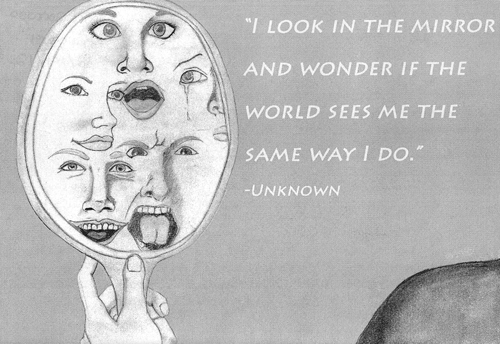
It is crucial to recognize that the presence of an imaginary friend does not serve as an indicator of mental instability or any form of psychological disorder; in fact, research suggests that imaginary friends are common and normal developmental experiences in both childhood and adulthood. Therefore, I respectfully request that my experiences and perspectives surrounding this topic be approached with genuine respect, empathy, and a sincere effort towards understanding, rather than being met with assumptions or judgment.







 Mindset Overload